Alikuwepo mtu aliyekuwa na tabia ya kudharau viumbe vidogo wakiwemo watoto wa nyoka. Mtu huyo, alijaribu kucheza na mtoto wa nyoka kwa sababu alimdharau akimfikiria kwamba hataweza kumdhuru. Wenzake wakamwambia, “acha kumchezea huyo mtoto wa nyoka atakuuma.” Yeye alikataa akisema, “hataweza kuniuma kwa sababu bado ndogo mno.” Wenzake wakamwambia, “mtoto wa nyoka hadharauliwi.” Aliposikia hivyo aliogopa na kumuacha mtoto huyo, kwa sababu alielewa kwamba kumbe mtoto wa nyoka naye ni nyoka, kama walivyosema watu wa zamani.
Methali hiyo huangalia viumbe vyenye sumu isiyo takiwa kudharauliwa. Nyoka aweza kuwaletea matatizo wale atakaowauma kwa sababu ya sumu yake ilivyo kali na ya hatari. Kumbe basi, mtu yule atakayeumwa na yule nyoka atapata matatizo yawezayo hata kupelekea kifo chake kama sumu hiyo haitawahiwa kuondolewa.
Methali hiyo, hulinganishwa kwa mtu yule ambaye hawalei vizuri watoto wake. Yeye huacha kuwaonya hata kama wanatabia mbaya. Mtu huyo huwatelekeza watoto wake hao kwa kuwaacha wakue wakiwa na tabia zao mbaya zinazofananishwa na sumu ya mtoto wa nyoka, maishani mwao.
Tabia hizo mbaya zaweza kumletea matatizo mtu huyo katika maisha yake, yanayofanana na nyoka mwenye sumu. Kumbe basi, inafaa watu wawapatie malezi mema watoto wao wangali bado wadogo ili waweze kuyaendeleza vyema maisha yao. Ndiyo maana watu husema kwamba, “mtoto wa nyoka hadharauliwi.”
Methali hiyo, hufundisha watu juu ya kuwapa malezi mema watoto wao tangu wakiwa wadogo, ili waweze kukua wakiwa na tabia njema maishani mwao. Yafaa pia watu waache kushikana urafiki na watu wenye tabia mbaya, katika maisha yao.
Marko 10:13-14. “Watu walikuwa wakimletea Yesu watoto wadogo ili awaguse lakini wanafunzi Wake wakawakemea. Yesu alipoona yaliyokuwa yakitukia akachukizwa, akawaambia wanafunzi Wake, “Waacheni watoto wadogo waje kwangu, wala msiwazuie, kwa maana Ufalme wa Mungu ni wa watu kama hawa.”
1Wakorintho 1:19-20. “Kwa maana imeandikwa: “Nitaiharibu hekima ya wenye hekima na kuzibatilisha akili za wenye akili.” Yuko wapi mwenye hekima? Yuko wapi msomi? Yuko wapi mwanafalsafa wa nyakati hizi? Je, Mungu hakufanya hekima ya ulimwengu huu kuwa umpumbavu?”
ENGLISH: NEVER LOOK DOWN AT A YOUNG SNAKE.
There was a man who had a habit of despising small creatures including small snakes. Therefore, the man, tried to play with the snake’s child because he despised thinking that it could not harm him. His companions told him, “Stop playing with the baby snake, it will bite you.” He refused, saying, “It can’t hurt me because it is still too young.” His companions told him, “never look down at a young snake” When he heard this, he became afraid and left it, because he knew that small snake was also a snake, like what the old people say that a baby snake should not be looked down at.
This proverb focuses on poisonous creatures that should not be despised. The snake can cause problems for those it will bite because of its dangerous venom. However, the person who is bitten by the snake will have problems that can even lead to his death if the poison is not removed.
This proverb is likened with a person who does not raise his children well. He stops warning them even if they have bad attitudes. He abandons his children by making them grow up with their own bad habits resembling the venom of a baby snake, in their lives.
Such bad habits can lead to problems in one’s life, much like the venom of a poisonous snake is. Therefore, it is important for people to give their children a good upbringing at an early age so that they can improve their lives. That is why people say “never look down at a young snake.”
This proverb teaches people to give good education to their children from an early age, so that they can grow up to be good people in their lives. It is also important for people to stop associating themselves with bad people in their lives.
Methali hiyo, ilitokea kwa wanawake waliosaidiwa kazi ya kubeba mzigo wao na mvulani mdogo. Wanawake hao, walishindwa kubeba mzigo wao huo kwa sababu uliokuwa mzito. Akaja mvulana mmoja mwenye umbo dogo akawambia, “kama huo mzigo umewashinda nije niwasaidie kuubeba.” Wao wakamjibu, “ikiwa sisi tulio wakubwa tumeshindwa kuubeba, utauweza kuubeba wewe uliye mdogo?” Yule kijana akajibu, “niachieni nijaribu.” Walipomuachia yule kijana aliubeba ule mzigo mpaka akaufikisha kule walikokuwa wakienda. Ndipo hao wanawake wakasema kwamba, “mtoto wa kiume hadharauliwi.”
Methali hiyo, hulinganishwa kwa mtu mwenye tabia ya kuwadharau watu kwa sababu ya muonekano wa miili yao kuwa ni wadogo. Mtu huyo, huamua maneno yake na mipango yake, kwa kuangalia umbo la nje ambalo mtu analo. Yeye haelewi kwamba, mtu anaweza kufanya kazi kubwa hata kama anaumbile dogo la mwili wake.
Mtu huyo, hufanana na wale wanawake waliomdharau yule kijana mwenye mwili mdogo aliyeweza kuwasaidia katika kuubeka mzigo wao, mpaka akaufikisha kule walikokuwa wakielekea. Ndiyo maana wale wanawake walisema kwamba, “mtoto wa kiume hadharauliwi.”
Methali hiyo, hufundisha watu juu ya kuacha tabia ya kuwadharau watu wao kwa sababu ya muonekano wao wa nje, ili waweze kusaidiana vizuri katika kuyatekeleza majukumu yao yanayoweza kuwaletea maendeleo ya kuzijenga vizuri familia zao. Kumbe, wanatakiwa kuwa na heshima kwa watu wote wanaoishi nao bila kuwabagua kutokana na maumbile yao.
Daudi na Golithi,
1Samweli 17:42-54. “Mfilisti akamwangalia Daudi kote na kumwona kuwa ni kijana tu, mwekundu na mzuri wa kupendeza, naye akamdharau. Akamwambia Daudi, ‘Je, mimi ni mbwa, hata unanijia na fimbo? ‘ Yule Mfilisti akamlaani Daudi kwa miungu yake. Akamwambia, “Njoo hapa, nami nitawapa ndege wa angani na wanyama wa mwituni nyama yako.” Daudi akamwambia yule Mfilisti. “Wewe unanijia na upanga, mkuki (fumo) lakini mimi ninakujia kwa jina la BWANA Mwenye Nguvu, Mungu wa majeshi ya Israeli, ambaye wewe umemtukana. Siku hii leo BWANA atakutia mkononi mwangu, nami nitakupiga na kukukata kichwa chako. Leo nitawapa ndege wa angani na wanyama wa nchi mizoga ya jeshi la Wafilisti, nayo dunia yote itajua kuwa yuko Mungu katika Israeli. Wale wote waliokusanyika hapa watajua kuwa BWANA haokoi kwa upanga wala kwa mkuki, kwa kuwa vita ni vya BWANA, naye atawatia wote mikononi mwetu.”
Yule Mfilisti aliposogea karibu ili kumshambulia, Daudi akaenda mbio kuelekea safu ya vita kukutana naye. Akatia mkono wake mfukoni na kuchukua jiwe, akalirusha kwakombeo nalo likampiga yule Mfilisti kwenye paji la uso. Nalo lile jiwe likaingia chini kipajini mwa uso, akaanguka kifudifudi. Basi Daudi akamshinda huyo Mfilisti kwa kombeo na jiwe, bila kuwa na upanga mikononi mwake akampiga huyo Mfilisti na kumwua. Daudi akakimbia na kusimama juu yake. Akaushika upanga wa huyo Mfilisti na kuuvuta toka kwenye ala yake. Baada ya kumwua, akakata kichwa chake kwa ule upanga. Wafilisti walipoona kuwa shujaa wao amekufa, wakageuka na kukimbia. Ndipo watu wa Israeli na Yuda wakainuka kwenda mbele wakipiga kelele na kufuatia Wafilisti mpaka kwenye ingilio la Gathi kwenye malango ya Ekroni. Maiti zao zilitawanyika kando ya barabara ya Shaaraimu hadi Gathi na Ekroni. Waisraeli waliporudi kutoka kuwafukuza Wafilisti wakateka nyara kambi yao. Daudi akachukua kichwa cha yule Mfilisti na kukileta Yerusalemu, naye akaweka silaha za huyo Mfilisti katika hema lake mwenyewe.”
ENGLISH: DO NOT DESPISE A YOUNG BOY.
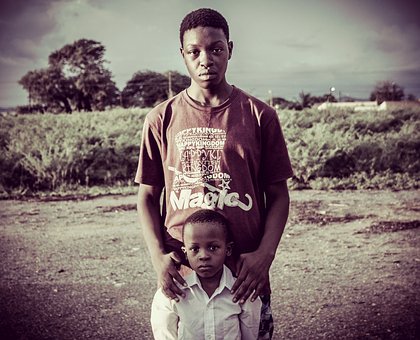
This Kisukuma proverb emanates from the story of women who were helped to carry their heavy luggage by a small young boy. These women were unable to carry it because it was too heavy for them to carry. Puzzled, not knowing what to do next, a small young boy came up to them and said, “If this luggage of yours is too heavy for you to carry it, let me help you to carry it.” Looking at him and seeing how small he was, they replied, “If we who are grown up and energetic have failed to carry it, will this small young boy be able to carry it?” The small young man replied, “Let me try.” When they let him try, the young man carried the load until he reached the women’s destination. Surprised at what he had done, the women said, “do not despise a young boy.”
This proverb serves as a lesson to a person who has a tendency to look down on some people because of their physical appearances. Because of this bad habit, such person, evaluates or assigns value to a person based on the outward appearance that such a person has. He does not understand that a person can do great work even if he/she is small in stature.
Such person is like the women who despised the little boy but who was able to help them carry their load, until he got to where they were going. That is why the women said, “Do not despise a young boy.”
This proverb teaches people to stop despising other people because of their outward appearance. Instead; they should support each other in fulfilling their responsibilities for better building of their families. In fact, they should respect other people by living with them without discriminating them.
This proverb is closely related with David and Goliath’s story found in 1 Samuel 17: 42-54.
This is a brilliant interview in English with Marehemu Padri Charles Nyamiti. Please watch it carefully.
I am writing to ALL my Sukuma friends – bishops, priests, seminarians. And to some theologian friends.
I am asking: how serious are YOU about inculturation in Sukumaland – both theory and practice. How serious are YOU about African Inculturation Theology and African Narrative Theology. I am reminded of the words of Nyamiti: “We need to identify the universal values in African proverbs and sayings and reinterpret them in a modern way.”
Father Donald F. Sybertz, M.M, died on Sunday, 19 April, 2020 at the Assisted Living Center at Maryknoll, New York, USA. He was 91 years old and a Maryknoll priest for 64 years.
Donald Francis Sybertz was born 23 July, 1928, in North Weymouth, Massachusetts, the son of Frank W. and Helen Bronder Sybertz. He had three sisters and one brother. He attended Bicknell Elementary School and Weymouth High School (where he played second base on the varsity baseball team) and earned a Bachelor of Arts degree in Economics from Boston College before entering Maryknoll in September, 1950.
After his ordination in 1955, Father Sybertz was assigned to Maswa-Shinyanga, Tanzania, where he served in the Kilulu mission in Shinyanga Diocese, the plains region of northern Tanzania. Father Sybertz built the first home there to provide shelter and care for aged persons lacking families and housing. He was later assigned to Gula Parish, a large sprawling parish undergoing expansion geographically as well as in the number of parishioners. Eventually the parish was divided into several parishes, and Father Sybertz moved from Gula to Mwanahuzi and developed that center into a separate parish.
Over the years, Father Sybertz was one of the Maryknollers most proficient in the Sukuma language. His facility in the language, interest in the culture and knowledge of how to inculturate Christianity among the Sukuma people led him into a continuing study of how to relate Scripture and the African wisdom proverbs, sayings, stories and parables of the people. This study resulted in the publication of several books in Swahili, Sukuma and English as evangelization materials for the Tanzanian Church.
Don Sybertz spent a lifetime (1955 to 2020) researching, writing about and using Sukuma (Tanzania) Proverbs. So far there are 19 Sukuma “African Proverbs of the Month” on our African Proverbs, Sayings and Stories Website (www.afriprov.org). Some of his favorites:
June,1998: I pointed out to you the stars (the moon) and all you saw was the tip of my finger. NOTE: This was our very first proverb on our website.
October, 2003: The hen with baby chicks doesn’t swallow the worm.
February 2014: The hoes of two people cultivating together in a field sometimes clash (hit) against each other.
October, 2018: The salesperson (seller or merchant) does not have only one door.
February, 2019: The medicine for a rising river is to go back.
October, 2019: Even an elephant, that is, an important person, can be sent.
These and many other Sukuma proverbs and stories are published in Joseph Healey and Donald Sybertz, Towards an African Narrative Theology, (Nairobi: Paulines Publications Africa, 1996 (1st Reprint 1996, 2nd Reprint 1997, 3rd Reprint 2000, 4th Reprint 2005, 5th Reprint 2012) and Maryknoll, NY: Orbis Books, 1997, (many reprints, New Cover 2012). Available as an Ebook on Amazon (for Kindle) and Google.
The Sukuma Legacy Project promotes the history, culture, oral literature — Proverbs, Sayings, Riddles, Stories, Myths and Songs — and visual representations of the Sukuma People in Tanzania in East Africa. There are various examples of SCCs and community values. This website is dedicated to Father Don Sybertz, MM who stayed among the Sukuma people for over 50 years in Shinyanga Diocese. While staying in Ndoleleji Parish he researched the rich folklore and culture of the people. See a short film about Sybertz HERE. The research committee that he created at Ndoleleji Parish (known as the Kamati ya Utafiti) is still working up to today.
Reflects what traditional African proverbs, sayings, stories and songs used in Christian catechetical, liturgical, and ritual contexts reveal about Tanzania, and about all of Africa. Includes appropriations of, and interpretations of, Christianity in Africa.
Chapter Three on “African Christology” is called “Jesus Chief Diviner-Healer and Eldest Brother-Intercessor” and Chapter Four on “African Ecclesiology” is called “Church as the Extended Family of God.” It includes sections on: “African Metaphors of Church.” “Communion Ecclesiology from An African Perspective.” “Trinitarian Communion Ecclesiology.” “We Are the Church.” “Theology of Small Christian Communities as a New Way of Being Church.” “Ecclesiology of Church-as-Family.” “African Communion Ecclesiology and Pastoral Inculturation.”
Father Sybertz spent his entire missionary career in Tanzania. He served as Pastor of the Mwanahuzi Catholic Church until it was turned over to a diocesan priest.
Although Father Sybertz was given Senior Missioner Status in the Africa Region in 2001, he continued to work full time in Maryknoll’s inculturation and evangelization apostolate in Shinyanga, Tanzania.
In 2015, Father Sybertz was assigned to the Senior Missioner Community and took up residence at Maryknoll, New York. He was appointed to the Mission St. Teresa’s Prayer Partners Team in 2016.
Don was a huge sports fan – following closely every Boston, Massachusetts, USA team. He was a good winner and a good loser. We had a lot of fun over years talking sports. Sports was second to spirituality in his priorities. Years ago Don and I traveled to Ethiopia, Amsterdam and on to Newark. The first night home we stayed at my brother and sister-in-law’s house in New Vernon, NJ. After arriving at their house, within minutes the first thing we did was start watching the Red Sox – Orioles playoff game on TV! Don never got tired of baseball.
Many stories have grown up around Marehemu Padri Don Sybertz. Here is one: When Maryknoll priest Father Ed Hayes, Maryknoll Lay Missioner Susan Nagele and Maryknoll priest Father Joe Healey were preparing for the 1990 Maryknoll Society General Chapter we distributed a written questionnaire in the Tanzania Region. All answered but two Maryknoll Society Members including Father Don Sybertz who was “notorious” for never answering anything. After a weekend of a Red Sox – Yankee baseball series, I called Don in Ndoleleji Parish, Shinyanga from Musoma on the radio call phone system that we had between parishes. For all to hear I said, “Don, I will give you the results of the Red Sox games only if you promise to send in your questionnaire.” He answered, “I promise,” for all to hear. Then I gave him the results of the Red Sox winning two games to one.
The next day he sent in his questionnaire! baseball series, I called Don in Ndoleleji Parish, Shinyanga from Musoma on the radio call phone system that we had between parishes. For all to hear I said, “Don, I will give you the results of the Red Sox games only if you promise to send in your questionnaire.” He answered, “I promise,” for all to hear. Then I gave him the results of the Red Sox winning two games to one. The next day he sent in his questionnaire!baseball series, I called Don in Ndoleleji Parish, Shinyanga from Musoma on the radio call phone system that we had between parishes. For all to hear I said, “Don, I will give you the results of the Red Sox games only if you promise to send in your questionnaire.” He answered, “I promise,” for all to hear. Then I gave him the results of the Red Sox winning two games to one. The next day he sent in his questionnaire!
Father Sybertz was the brother of the late Dolores Hoyt, Loretta Sybertz, Ruth Hyland and Norbert Sybertz. Father Sybertz is survived by many loving nieces and nephews and his extended family in Tanzania to whom he devoted his life.
A Funeral Mass (Mass of Christian Burial) was celebrated in Queen of Apostles Chapel at Maryknoll, NY on 23 April, 2020 at 11:15 a.m. Father Michael Snyder, M.M., was Celebrant. Father Daniel Ohmann was homilist and Father Edward Davis read the biography, Scripture and the Oath. Burial followed in the Maryknoll Society Cemetery.
In the Memorial Mass for Marehemu Don Sybertz, Mwana Helena, in Nairobi, Kenya on 23 April, 2020 we tried to inculturate some Sukuma values in the liturgy. The “Prayer of the Faithful” ended with:”…in the name of Jesus Christ, our Eldest Brother/Chief Intercessor.” This is the Sukuma people’s name for Jesus Christ. It is the eldest brother, the firstborn male who offers sacrifice to the one God in the Sukuma Ethnic Group tradition. Compare Colossians 1:15: the beloved Son who is “the image of the invisible God, the firstborn of all creation.” We used Preface III of Easter on the theme: “Christ living and always interceding for us.” It includes the words: “Christ never ceases to offer himself for us, but defends us and even pleads our cause before God.”
In this Memorial Mass we had a Dialog Homily when the homilist promoted interaction with the congregation participants using questions, invitation to make comments, proverbs and sayings (first and second parts) and open discussion. This was Don Sybertz’s favorite way of preaching. More of a conversational style. Example: Don: “I pointed out to you the stars (the moon)…Congregation: and all you saw was the tip of my finger.”
Some tributes: “We pray for and with our dear Marehemu Padri Don Sybertz, MM. He is now one of our ancestors in Christ, one of our “living dead.” The Sukuma people in Shinyanga Diocese, Tanzania loved him very much and called him the endearing name “Mwana Helena” (‘Child or Son of Helena’) after his mother.” “Padri Don Sybertz’s other Sukuma name was LUKALANGESE that means the one who finishes all the weeds in his field. Meaning: Take away all that is against the will of God in one’s life and put into practice the Lord’s commandments. Don prepared nicely his spiritual life by putting into practice the teachings of Jesus. That is why we consider him as a “Saint.” He also helped others in weeding their fields that spiritually means developing their lives by living according the teaching of our Lord Jesus Christ. He taught us on how to live a holy life.” “He was a living saint. What a blessing to have known him. Enjoy your heavenly reward.” “Raha ya milele umpe ee Bwana. Na mwanga wa milele umwangazie.” “Pole sana mwanajumuia Ng’wana Helena ametuaga yangu juzi tunatoa mistakes ajili yake Mungu ampokee. Kazi zake njema zimpeleke kwa Baba akayaone yale aliyotamani kuyaona. Namatumai ikwamba ataiobea kazi yetu ya utafiti. Siku ya mzishi yake nitaongoza misa hapa kwetu.” “May the good Lord rest his soul in heaven. This is yet another African elder who has left us. Fr. Don pumzika kwa amani.”
“His co-edited book on African Narrative Theology was a wonderful resource to tie in
with scripture reflection in Tanzania. Helped bring the readings to everyday life.” I never met Padre Don, but this book was a great tool for me and my friends when we were studying theology at Hekima College. Even now as a communicator this is a great resource to appreciate our ancestors’ practical wisdom.” “Going through the African proverbs work, Father Don Sybertz really liked and invested his time in the proverbs collections and in sharing. A lot of work and enthusiasm in the project is truly seen.” Yes, Don was a great missionary. I remember him from the time that I was working in Shinyanga, and later from the Sukuma research. Accept my condolences to you and your confreres. May Don rest in peace.” “He was committed to the SCCs Model of Church and promoted SCCs in his ministry of evangelization in Shinyanga Diocese, Tanzania. He integrated Sukuma proverbs and stories into his SCCs ministry as part of inculturation.” “My heart hurt yesterday when I heard this news. I bet I can tell some great Sybertz stories too. He was a faith filled priest. I will miss him.” “We can honor Don by promoting the Sukuma Legacy Project.”
“You and Don had unconditional love and esteem for the African culture and people. Together you compiled African verses. You both spent a life time in East Africa. Don loved what he was doing each day out in the bush. Several year ago, I visited Don and his brother when he was staying with his family in Weymouth, Massachusetts. His niece and family lived next door. It was a wonderful Sybertz compound. His brother also has passed away. Don never forgot his roots namely, New England, Weymouth, Boston College, Red Sox and Patriots. He never lost his enthusiasm for the games. Perhaps these and other aspects of his life made you and Don soulmates and at the same time adversaries in the world of sports. Don witnessed to us all what is the very best of a Maryknoll vocation. Now he has finished the race, may he receive the prize of eternal life and sit at the heavenly table with many friends from Tanzania who went before him.” “We loved Don very much. He will always have a special place in our hearts.”
During his last years Don would listen to St. Therese of Lisieux’s famous book Story of a Soul on his Alexa listening device given to him by his niece. In these sorrowful times we can be consoled by the words of St. Therese of Lisieux on her deathbed: “I am not dying. I am entering into eternal life.” RIP
Complied and edited by:
Rev. Joseph G. Healey, MM
Maryknoll Society
P.O. Box 43058
00100 Nairobi, Kenya
“Matondo, Ng’wana Nchembe, oli ningi nkumuku uyo agasekwa kunguno ya bhugokolo bhokwe, na ningi ng’wiye Sengwa, ng’wana Jibishi uyo agimba: “Nagudula ginehe uguhoyela higulya ya ng’waka go nduhu mbula.
Makanza gose gali sawa ukuli weyi unduguone “Ung’wana Nchembe.” Ukuli weyi nduhu ubhuheke ahagati ya mbula ningi ni nduhu mbula. Uweyi adina lubhango, pye ishigu jili ja nduhu mbula.
Iligembe ugalibhonelaga soni ndugu one “Ng’wana Nchembe.” Nulu mpini adamanile ugugudima inyagosha, ubhugokolo udikumiligijage. Uguleka gulimana ilikanza lya nduhu mbula, udafaile gose gose, ndugu one Ng’wana Nchembe!” Lolaga Kugundua Mbegu za Injili, ukurasa 93.
Ijitabho jinijo jigandikwa na Kamati ya Utafiti wa Utamaduni Bujora, ijojigahaririwa na bhakengeji bha: Padri Donald Sybertz, M.M., na Padri Joseph Healey M.M., na guchapishiwa na Benedictine Pubhications Ndanda – Peramiho, 1993.
“Untaguso Untale go Vaticano ya Kabhili gokomelejaga bhanhu gutumama milimo bho bhukamu: “Bhazunya yigelelilwe bhishugulishe na guyiregebisha idunia yiniyi ibhize ipande liza lya gwikala” (Bhutume bho Bhalei).
Ubhugokolo bhodalahagwa na bhanhu guti Ng’wana Nchembe umo agadarahilwa na ningi ng’wiye Ung’wana Jibishi. Hangi bholemilwe nu Mulungu.
Umu bhupangi bho ng’wa Mulungu yili higulya yakwe bhuli munhu ugutumama milimo kubhukamu kugiki atimije uwajibhu ubho winhiwa gufumila kuli Mulungu. Nimo gose gose uyo duligutumama guli na solobho ya heke ukubhise nu ku miso ga ng’wa Mulungu.” Lolaga Kugundua Mbegu za Injili, ukurasa 94.
Mwanzo 2:15.
Mhubiri 11:4.
Mithali 6:9.
2Wathesalonike 3:10.
KISWAHILI: MWAKA MBAYA WA NG’WANA NCHEMBE.
“Matondo, mwana Nchembe, Manju maarufu alichekwa kwa sababu ya uvivu wake na Mangu mwenzie Sengwa, mwana Jibishi akiimba: “Nitawezaje kujadili juu ya mwaka wa ukame.
Majira yote ni sawa kwake ndugu “Ng’wana Nchembe.” Kwake hakuna tofauti, kati ya neema na ukame. Yeye hakuna Baraka, siku zote ni ukame. Jembe hulionea soni (aibu) ndugu yangu “Ng’wana Nchembe.”
Kitabu hicho, kiliandikwa na Kamati ya Utafiti wa utamaduni Bujora, kilichohaririwa na watafiti: Padri Donald Sybertz, M.M., na Padri Joseph Healey M.M., na kuchapishwa na Benedictine Pubhications Ndanda – Peramiho, 1993.
“Mtaguso Mkuu wa Vatikano wa Pili umewahimiza watu kufanya kazi kwa bidii: “Waumini hawana budi kujishughulisha na kuirekebisha dunia hii iwe mahali pazuri pa kuishi” (Utume wa Walei).
Uzembe umedharauliwa na watu kama mwana Nchembe alivyodharauliwa na Manju mwenzake mwana Jibishi. Tena umekataliwa na Mungu. Katika mpango wa Mungu ni juu yake kila mtu kufanya kazi kwa bidii ili atimize wajibu aliopewa kutoka kwa Mungu. Kazi yoyote tunayofanya inayo thamani ya pekee kwetu na machoni mwa Mungu.” Rejea Kugundua Mbegu za Injili, ukurasa 94.
Mwanzo 2:15. “BWANA Mungu akamchukua huyo mtu akamweka kwenye Bustani ya Edeni ailime na kuitunza.”
Mhubiri 11:4. “Ye yote atazamaye upepo hatapanda, ye yote aangaliaye mawingu hatavuna.”
Mithali 6:9. “Ewe mvivu, utalala hata lini? Utaamka lini kutoka katika usingizi wako?”
2Wathesalonike 3:10. “Kwa maana hata tulipokuwa pamoja nanyi, tuliwapa amri ili kwamba: ‘‘Mtu ye yote asiyetaka kufanya kazi, wala asile.””
ENGLISH: THE BAD YEAR OF NCHEMBE’S SON.
Nchembe’s son, the famous traditional singer, was laughed at by his fellow traditional singer, Jibishi’ son, through the song: ” How can I discuss the year of drought?
According to Nchembe’s son, all seasons of the years are the same. To him there is no difference between grace and drought. Also, to him, there is no blessing; the world is full of drought. He feels ashamed of touching a hoe.
Nchembe’s son is futher described as someone who cannot handle well his hoe to demonstrate that he is not masculine enough to dig for his family. Failure to know the seasons of year makes Nchembe’s son appear as someone who doesn’t fit in the society (Refer to Kugundua Mbegu za Injili, which means ‘Discovering the Seed of the Gospel,’ page 93).
This book was written by the Bujora Cultural Research Committee, edited by researchers: Patriarch Donald Sybertz, M.M., and Patriarch Joseph Healey M.M., and published by Benedictine Publications, Ndanda – Peramiho, 1993.
The Second Ecumenical Council of the Vatican urged people to work hard:” Believers must work to make this world a better place to live ”(Apostolate of the Laity ).
Negligence is despised by people as Nchembe’s son was despised by his fellow Jibishi’s son. It’s In God’s plan for everyone of us to work hard to fulfill our God-given responsibilities. Any work we do has a special value to us and in God’s eyes (See ‘Discovering Gospel Seeds,’ page 94).







 Sukuma Legacy Project