Songs

51. Nkima Nsembo Na Nsisaye

Collected by: Don Sybertz, Scanned by: Cephas Yao Agbemenu

With special thanks to Rev Joe Healey (African proverbs,Sayings and stories)

Kale walaliho ng’waniki umo, hakaya ya namhala Lyeta. Kaya yeniyo yali Nhale no. Yali na Bhanhu bhingi no. Sha Lushiku lumo agiza ngosha, kulunja (kukobha nkima wa kutola) Akapandika.

Agantola ng’waniki uyo witanagwa wanguzu. Myatila ya witoji ikitwa. Bhitoji bhuja gukaya. Bhukabheja kaya yabho, aliyo mukwikala gwabho, bhigashaga mu mayange no, nguno yombo na widumi wali bhutashilaga hakaya yabho. Na ng’hangala ningi, wanguzu wa shokaga kaya gujubhula. Umo agakoyejiwagwa nu ngoshi.

Aliyo bhabyaji bhakwe ni kaya bhugima bhaga nkolwa no unkwilima wabho nose uyise agabhaja mhayo, gogushosha sabho ijo agafunya ngosha ng’wenuyo.

Mhayo gwenuyo namhala, akilomela ikaya. Nabhakizunilija giki bhose, ulu alashokeje hangi ungosha kuntula nke, mumho ng’wisho go witoji wabho.

Aliyo aha ililungwa lungwa, yeniyo, Wanguzu waladegelekile. Na agatogwa no mung’holo yakwe. Aho wela Wanguzu uja kaya yakwe. Shiku jidakwilile Wanguzu wiza makanza ga limi, akulilaga giki watulagwa no, na nduhu nguno jose jose.

Uyise pye ni kaya ngima bhakasaya no. Gulekela nsumba umo. Namhala agantuma na haho ng’wana wakwe, uyo wali heke heke. Akang’wile unkwelaye, wize idilu atule shikolo shakwe. Nsumba uja ukang’wila.

Aha wela ntoji wiza dilu na nshigeli. Aho washika nsisaye wa nke usaya usola nang’ha antule. Aliyo mbehi, ng’wenuyo agiponeja hanshigeli upelela hangunda gwali hihi.

Pye bhukingila mo, aho ilitwa yeniyo nke wala lolile, akasega no aha wamona ungoshi alipejiwa. Na akasola ndobho, uja na kumongo kujudaha minzi.

Aha bhashiga hagati ya ngunda, nsisaye wanke ung’witana unkwelaye, “Ng’wana omayu, tujage kaya, na dina mhayo gogugutula, aliyo nalichola kumana Nke wako ulwa gutogilwe.”

Pye abhose bhushoka kaya. Aha bhashika hakaya. Nkwilima uchalwa, mumaji ya nkwelaye unsisaye wa nke. Uwilwa” ng’wana omayu ikalaga.

Nsisaye wanke ufuma hanze, udima mbuli wisinza. Wipindya kunpindo ya numba. Ubhinha bhabhagi bhandya kubhaga. Ng’weyi usola lushu lo kimasai, ulu tobha maninga. Uga lutula uko nzila iyi bhakizilaga abhadahi bha minzi.

Lidakulile ikanza nke wa ngosha ng’wenuyo, uyo wapejiwagwa wiza na bhiye bhadatu. Aho bhegela hakaya, nsisaye ukalusola ulushu wandya kuludima dima. Aliyo lo jimaga maninga no.

Aliyo aha bhashika hakaya ilumbuye umona nsisaye, nu lushu lwa maninga. Ahatali kutula ndobho ubhuja, “Ulushu lunulo ng’wasinzilaga ki?” Nsisaye uhaya, “Ambu nansinzaga uyo agagukoyaga.”

Haho na haho wilekela indobho yugwa. Wandya kulila aliyomba. “Ngwanibhulagila ngoshi wane, wamkenyaga ki nayi, nulu agamutulaga ying’we nayi. Mugunitola abhing’we?”

Haho na haho uchoma ng’wano, ali haya, “Anguhagi wabhulagwa munhu nu Sang’udi nsisaye, witanagwa Sang’udi. Ikanza litakulile bhanhu bhokala pa, nkima ulomela pye umo ya bhitilaga.

Bhanhu bhuntula hagati usang’udi giki mulagi. Sang’udi nang’hwe uyomba umo agabhakoyejaga. Nkima ng’wenuyo aha atina mala kuyomba Sang’udi, Wanguzu uhaya, “Iki nakamukoyaga ina muwila mumulage?’

Hambunu Sang’udi ung’hamukila unkwelaye, wiza kufuma mukaya. Ng’wano gujinjimala, gulamula afunye ng’ombe uwanguzu. Ufunya haho na haho. Na Wanguzu ucha soni, atalalile uja kaya na ngoshi.

Aha bhakashika ikaya wanguzu ung’wila ngoshi, “Ngoshi wane noyaga kufuma lelo amasemba.” Kwinga lushiku lwene bhagikala siza no. Yombo igashila. Agoya ukuja ikaya guchala iyanyalomolomo.

Kiswahili: Mwanamke Mwenye Uongo Wa Kichongezi Na Kaka Yake

Zamani alikuwepo msichana mmoja kwenye familia ya Lyeta. Familia hiyo ilikuwa kubwa mno. Ilikuwa na watu wengi. Siku moja alikuja mwanamume kuchumbia au kutafuta mwanamke wa kuoa, alipata.

Alimuoa msichana yule aliyekuwa anaitwa wanguvu. Hatua za uoaji zilifanyika. Wana ndoa walienda nyumbani. Wakaenda kutengeneza mji wao au familia yao.

Lakini katika kuishi kwao walikuwa na mahangaiko mno, kwa sababu ya kelele na kukosana vilikuwa haviishi. Mara nyingi Wanguzu maana yake, wa nguvu, alikuwa anarudi nyumbani kwa wazazi wake kwenda kushitaki, anavyohangaishwa na mmewe.

Lakini wazazi wake na familia nzima walimchukia mkwe wao mwishowe baba yake aliwaza neno la kurudisha mahari alizotoa mwanamume huyo.

Mzee aliiambia familia juu ya wazo hilo. Walikubaliana wote kwamba, akirudia tena yule mwanamume kumpiga mkewe, ajue ndiyo mwisho wa kuoana kwao.

Lakini walipokuwa wakiongea Wanguzu aliwasikiliza. Pia alifurahi mno moyoni mwake. Kesho yake Wanguzu alienda nyumbani kwake. Hazikupita siku nyingi wanguzu akaja wakati wa mchana, akilia kwamba amepigwa mno, na bila sababu yoyote.

Baba yake na familia nzima walikasirika mno isipokuwa kijana mmoja tu. Hapo hapo mzee alimtuma mtoto wake, aliyekuwa na muono tofauti na wao. Akamwambie shemeji yake, aje asubuhi achukue mahali yake. Kijana huyo alienda akamwambia.

Kesho yake muoaji alikuja asubuhi na baiskeli. Alipofika kaka yake na yule msichana alikasirika akachukua fimbo ampige. Jamaa yule alijitupia kwenye baiskeli yake akakimbilia kwenye shamba ambalo lilikuwa karibu.

Wote wakaingia humo. Wakati yanafanyika hayo mke wake alikuwa anaangalia, alicheka mno alipomuona mmewe akifukuzwa. Akachukua ndoo, akaenda mtoni kuchota maji.

Walipofika katikati ya shamba kaka yake na yule mwanamke akamwita shemeji yake, “Shemeji, twende nyumbani, sina neno la kukupiga, lakini natafuta kujua kama mke wako anakupenda.”

Wote wakaenda nyumbani. Walipofika nyumbani, mkwe alipelekwa kwenye nyumba ya kaka yake yule mwanamke. Aliambiwa, “shemeji kaa.

Kaka yake yule mwanamke alitoka nje akashika mbuzi na kumchinja. Akampeleka nyuma ya nyumba. Akawapa wachunaji wakaanza kumchuna. Yeye alichukua kisu cha kimasai, akakipaka damu. Akaenda kukiweka kisu hicho kwenye njia ile wanayopitia wachota maji wakati wa kurudi.

Haukupita muda mrefu mke wa mwanamume huyo, aliyekuwa akifukuzwa akaja na wenzake watatu. Walipokaribia kufika nyumbani kaka yake akaenda kukichukua kile kisu, akaanza kukishika shika hicho kisu lakini kilikuwa kimeenea damu mno.

Lakini walipofika nyumbani dada yake akamuona kaka yake, na kisu chenye damu. kabla ya kuweka ndoo aliuliza, “Na kisu hicho mmechinjia nini?” Kaka yake akasema, “Si nimemchinja yule anayekuhangaisha.”

Hapo hapo akaiachia ile ndoo ikaanguka. Akaanza kulia, akisema, “Mmeniulia mme wangu, kwani amewakosea nini? Amewakosea nini, au anawapiga ninyi kwani, mtanioa ninyi?”

Hapo hapo akapiga yowe, yuko hapa, “Wahini ameua mtu ni huyo Sang’udi kaka yangu, aliitwa Sang’udi. Haukupita muda watu wakajaa pale, mwanamke akaeleza yote ilivyotokea.

Watu walimweka katikati Sang’udi kama muuaji. Sang’udi naye alisema anavyowahangaisha mwanamke huyo. Kabla hajamaliza kusema, Sang’udi, Wanguzu alisema, “Kwa vile nawahangaisha, niliwaambia mmuue?”

Kushitukia Sang’udi alimwita shemeji yake, akaja kutoka ndani. Mkusanyiko ukashangaa, ukaamua atoe ng’ombe Wanguzu. Akatoa hapo hapo. Wanguzu alipata aibu, hakulala alienda na mmewe nyumbani kwao.

Walipofika nyumbani Wanguzu alimwambia mmewe, “Mme wangu nimekoma kutoka leo kufanya matani.” Kutoka siku hiyo walikaa vizuri mno. Kelele ilikwisha. Alikoma kwenda nyumbani kupeleka uongo uongo.

couple-AFRICAN

ENGLISH: THE DECEITFUL WOMAN AND HER BROTHER

Once upon a time, there was a woman called Wanguzu (of strength) in the Lyeta family. The family was very big. One day a man went to the house of the Lyeta family to ask for Wanguzu’s hand in marriage; he was successful.

Preparations for the wedding were carried out and finally Wanguzu and the man got married. They started their own family.

But in their life together they were very worried because of the tensions they had. Often Wanguzu returned to her parents’ house and told her family members that her husband had beaten her.

Her parents as well as the other family members developed hatred for Wanguzu’s husband. Her father began thinking of returning the dowry to the man.

The old man shared the idea with the other family members. They all agreed that, if the man beat his wife again, they would end the marriage.

When they were talking to Wanguzu, she listened to them intently. She was very happy. The next day Wanguzu returned to her husband. A few days later she returned to her parents’ house, complaining that she had been severely beaten, and for no reason.

Except for one young man, Wanguzu’s father and the other family members were very angry. Immediately the old man sent one of his sons, who had a different opinion on the matter from the other family members, to his brother-in-law’s house. They young man asked his brother-in-law to go to their house the following morning to collect his dowry.

The following morning Wanguzu’s husband went to his in-laws’ place by bicycle. The woman’s brother was so angry that he took a stick with which to hit him. The man mounted his bicycle and ran to a nearby farm.

Both entered the farm. When all this was happening, his wife was looking on. She laughed when she saw her husband being chased. She took a bucket and went to the river to fetch some water, along with her three friends.

While in the middle of the fields, Wanguzu’s brother called his brother-in-law, “Brother-in-law, let’s go back home. I didn’t intend to hit you, but I only wanted to know if your wife loves you.”

Both went home. When they got home, they went straight to Wanguzu’s brother’s house. “Brother-in-law, please sit down,” he said while offering him a chair. Then he entered his house, in which there were some people.

Wanguzu’s brother walked out of the house and took a goat and killed it. He took the dead goat back into the house and gave it to the people to skin. He took a Maasai knife and put some of the blood of that goat on it. He went and put the knife on the footpath on which those who had gone to the river to fetch water would walk on their way home.

A short while later, the man’s wife and her friends returned from the river. Her brother went to the footpath and picked up the knife. There was much blood on it.

The woman saw her brother holding the knife, which was covered in blood. Before she put down the bucket, she asked, “And what have you killed with that knife?” His brother said, “I’ve killed the man who had been mistreating you.”

Then she let the bucket fall down and began to cry, saying, “You’ve killed my husband. What did he do to you? Had he been beating you? Are you going to marry me? ”She started screaming, “Please help. My brother Sang’udi has killed my husband.”  The brother was called Sang’udi. Presently people started gathering at the man’s house and the woman told them everything that had happened.

The people saw Sang’udi as a murderer. Sang’udi told them how his sister had been troubling them. As Sang’udi was speaking, Wanguzu said, “Yes, I’ve been troubling you, but did I ask you to kill the man?”

Then Sang’udi asked his brother-in-law to come outside. The people were surprised and punished Wanguzu by ordering her to give them a bull. A few days later, she gave it to them. She was so ashamed that she didn’t stay on at her parents’ place. Instead, she and her husband returned to their place.

When they got home, Wanguzu said to her husband, “My husband, I’ll never again make jokes about our marriage.” The quarrel and tensions stopped and she stopped going to her parents’ place to tell lies about her husband. They lived happily ever after.
50. Subhi Na Lung´wando

Collected by: Don Sybertz, Scanned by: Cephas Yao Agbemenu

With special thanks to Rev Joe Healey (African proverbs, Sayings and stories)

Waliho muna Subhi walazengile hipande ilebhe, ubhona hambu hambu nasame henaha. Giko wandya kubhuta mazengo, aho waja kukindika nigo gwa mazengo. Aho winga ho, Sayayi nang’hwe utwala nigo gwa mazengo, ntondo Subi usanga miligo ibhili ukumya! Utula gwa kadatu. Aho winga ho Sayayi wenha nigo gungi yushika inne. Bhamanaga bhita giko na kwibhona yaya.

Nose lushika lushiku lwa kusimbila numba, muna Subi usimbila ipande uja. Sayayi nang’hwe wiza usimbila ipande, numba yushila. Wandya kulumba muna Subi ulumba. Sayayi nang’hwe ipande lyakwe. Nose makanza gashiga ga kuikanda inumba.

Lushiku lwa kusamila mo Sayayi utonga kuja mo mu chumba jakwe. Giko wandya kubhacha moto, muna Subi ubhuja, “Nani wapemba moto mu numba yane,” Sayayi nang’hwe, “Nani wapemba moto mu numba yane.” Bhandya lulu kwiduka, aho wasaya umuna Subi, Sayayi ung’wila nke, “Bhalijage abhana.”

Aho bhalila, Sayayi umuja nke, “Bhana bhenabha bhalilijiwa ki?” Aho bhalila, Sayayi ushosha giki, “Bhalililila matima ga Mhuli. Aho wigwa Subi giki bhalihaya kubhulaga Mhuli bhabhenhele bhana bhabho matima wogoha ufumula.

Giko bhulala, ku ntondo hanngi yandya yombo. Sayayi ung’wila nke hangi, “Bhalijage abhana,” aho bhalila, ubhuja usayayi, “Bhana bhalilijiwa ki?” Nkima ushosha, “Bhalililila matima ga Subi.” Sayayi uhaya “Gwenuyu guli nimo ndo, bhabho bhalumu ntondo nakubhabhulagila bhana bhane bhalye matima.”

Bhana Subi bhatalalile bhujiku, aho wela dilu bhusama na kusama. Aho bhalisama bhukamanhya na Nguku. Nguku, ikumujaga giki, “Uyijiwa ki? (kuyila) dilu cheniki.” Nang’hwe alihaya, “Napejiwa mu numba na Sayayi angu bhana bhakwe bhalililila matima ga mhuli, ntondo bhakulya matima ga Subi.

Nguku yung’wila muna Subi giki, “Unene amasala ga ng’wa Sayayi nagamanile. Tujage nakutwale, twilujage (twilunganyage) mikila yise.” Aho bhegela Sayayi ung’wila nke, “Bhalijage abhana,” aho bhalila, Sayayi ubhuja, bhalilila ki?” Nkima uhaya, “bhalililila matima ga Subi.” Sayayi uhaya, “Chuu!! Twalaganaga na muna nguku giki akunenhela, uyo.” Aho wigwa muna subi uhaya, “Bhebhe walunilemba lembaga nakutwale, gashinaga wamalaga kulagana.” Bhuja bhakwidutanjaga wilekela numba yubi ya ng’wa Sayayi.

Kiswahili: Chui Na Sungura

Kulikuwa na chui aliyekuwa anaishi sehemu Fulani, aliona afadhali ahame. Hivyo alianza kukata fito za kujengea. Akaenda kuweka mzigo wa fito.

Alipoondoka pale, sungura naye alipeleka mzigo wa fito pale, kesho yake Chui alikuta mizigo miwili alishangaa! Aliweka wa tatu. Alipoondoka pale Sungura akaleta mwingine ikafika mine. Walikuwa wakifanya hivyo, bila kuonana.

Mwishowe ikafika siku ya kuchimbia nyumba. Chui alichimbia upande akaenda. Sungura naye akaja kuchimbia upande, nyumba ikaisha. Wakaanza kuezeka, chui akaezeka. Sungura naye upande wake. Mwishowe ukafika wa kuziba kwa matope nyumba hiyo.

Siku ya kuhamia humo Sungura alitangulia kwenda kwenye chumba chake. Hivyo akaanza kuwasha moto, chui akauliza, “Nani amewasha moto kwenye nyumba yangu?”

Sungura naye, “Nani amewasha moto kwenye nyumba yangu?” Wakaanza sasa kutukanana, alipokasilika Chui, Sungura alimwambia mkewe, “walize watoto.”

Walipolia watoto, Sungura alimuuliza mkewe, “Watoto wanalizwa na nini?” Walipolia Sungura alijibu hivi, “Wanalilia maini ya Tembo.” Chui aliposikia kwamba wanataka kuua Tembo wawaletee watoto wao maini, aliogoka, akanyamaza.

Hivyo walilala, kesho yake tena kelele ikaanza. Sungura akamwambia mkewe “walize watoto,” walipolia, aliuliza Sungura, “Watoto wanalilia nini?” Mkewe akajibu, “Wanalilia maini ya Chui.” Sungura akasema, “Hii ni kazi ndogo, hao wapo humu, kesho nitawaulia watoto wangu wale maini.”

Chui hawakulala usiku, kulipokucha asubuhi walihama na kuhama. Walipokuwa wanahama walikutana na nyani. Nyani aliuliza hivi, “umetoka jasho kwa sababu gani asubuhi hii?”

Naye Chui alisema, “Nimefukuzwa kwenye nyumba yangu na Sungura, eti watoto wake walililia maini ya Tembo, kesho watakula maini ya Chui.

Nyani alimwambia Chui hivi, “Mimi akili za Sungura nazifahamu. Twende tufungane mikia yetu.” Walipokaribia Sungura alimwambia mkewe, “walize watoto,” walipolia, Sungura alisema, “Aaa!! Tumeagana na nyani kwamba ataniletea huyo.”

Chui aliposikia hivyo, alisema, “Wewe ulikuwa unanidanganya danganya nikupeleke, kumbe umemaliza kuagana.” Wakaenda wakivutana, wakaiacha nyumba ikawa ya Sungura.

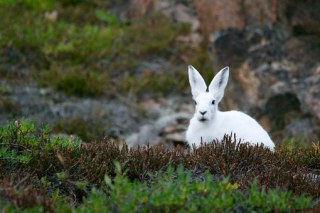
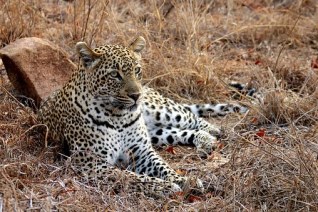
ENGLISH: THE LEOPARD AND THE HARE

There was a leopard who lived in a certain place. He decided to move. So he started cutting down the poles for a new house. One day, he went to put a bundle of poles at the building site.

When the leopard left site, the hare took a bundle of poles there. The following day, the leopard found two bundles of poles. He was surprised! He put the third one. When he left, there the hare brought another bundle. As a result, there were four bundles. The two animals were doing all that without seeing each other.

Finally, came the day of setting the house. The leopard set his own side and left. Then the hare came and did his share of setting the other side. Finally, the house was completed. Then came the time of plastering the house.

On the day of moving to the house, it is the hare that went to the house first. He went to his room and made fire. When he arrived, the leopard asked, “Who has set fire to my house?”

The hare also asked,“Who has set fire in my house?” The two animals started insulting each other. As a trick to deal with an angry leopard, the hare told his wife, “Make the children cry.”

When children cried out, the hare asked his wife, “What are the children crying for?” She replied, “They are crying for the liver of the elephant. When the leopard heard that, he thought they wanted to kill an elephant in order to give their livers to the children. He kept quiet.

The following day, the noise began again. The hare told his wife, “Make children cry out.” When they cried, the hare asked, “Why are the children crying?” His wife replied, “They are crying for the leopard’s livers.” Then the hare said, “This is an easy job.  It is easy because the leopards are here. Tomorrow I will kill them for my children.”

The leopard did not sleep that night. When morning came, the leopards decided to quit. While moving, the leopard met the monkey on the way. The monkey asked, “Why have you come out of the house sweating this morning?”

The leopard said, “I was kicked out of my house by the hare.  He said that his children were crying for the livers of the elephant, and then they cried for the livers of the leopard.”

Then the monkey said to the leopard, “I know  the hare’s tricks. I know them. Let us tie each other with our tails.” As they approached the hare’s home, she said to his wife, “Make the children cry.” When they cried, hare said, “Aaa!! I talked with the monkey to bring the leopard to me. ”

When the leopard heard that, he told the monkey, “You were deceiving me in order to take me to the hare.” The two started running, leaving the house in the hands of the hare.


arctic-hare-828994__340

leopard-


49. Ngoso Na Ntegi Wa Nzwabu

Collected by: Don Sybertz, Scanned by: Cephas Yao Agbemenu

With special thanks to Rev Joe Healey (African proverbs,Sayings and stories)

Kale walaliho munhu, wali ntegi wa nzwabu. Aho alija kujulinga wakabhitila kagoso kigashije ha mahushi. Kang’wila “Ligisha,” nang’hwe walema kuzunya. Nako kang’wila giki, “Nene ndakuyangula bhebhe nu bhutegi wako”.

Huna lushiku lumo ubhita, kung’wi1a hangi, ulema, uja. Wahayushika ha lwabu lwakwe, ulisangaho lishimba lyagwashiwaho. Lyung’wila giki, “Nitaligulilage wanduhaja no no no, bhujiku wa lelo natadimile nulu ndimu imo yaya.” Ulitaligulila.

Lyung’wila giki, “Ninhage ngobho yako nalye natubhaga no.” Ulinha. Lyumala, lyulomba shilalo sha lushu, na hene lyumala. Hangi lyulomba nshipi gwa munkimbili, lyugumila nugwene.

Huna lyunomba nkono gumo alibhutileho, ulila no. Huna kiza lulu akagoso, ako wakabhitilaga. Kuhaya giki, “Ni bhuli ng’wanikungu watubha giki?” Shimba yuhaya, “Natubhiwagwa na lugoye lwa ntegi.” Leka kuhaya chene ng’wanikungu. Ali lulu gemelaga nabhone umo ukizila.

Ntegi uwilwa na ngoso, “Tegaga agemele tulole.” Ugemela nakiza giki, “Chene manyandishi, nupanda aha, chene ng’wanikungu.” Nose ugwashiwa ho hangi.

Ngoso yung’wila ntegi giki, “Dupelage lulu, wizuke nakuwilaga kinahe? Ndakuyangulaga.” Uzunya untegi giki, “Lelo waniyangula gete. Ali lulu naja kaya. Wabhizaga mpija wane mu Shimba. Ulize unigishe na bhiyo bhingi no no no. shose ukusanga nabheja shabhuhondo shingino.”

Huna ngoso yung’wila untegi, “Ali lulu, ulu ndizage mutizita shiliwa shigehu. Abhichane bhali no. uhaya giki, “Bhatudula kushimala.” Huna bhubhuka.

Ngoso ya magana shiku. Jushikila mu mahaka na ha nyango. Shiliwa shulebha, julya ni ndili shaho, nijene jushila. Nose jukalya na ntana. Huna bhusaya abhanhu, bhujitula. Ngoso kufuma henaho juzenga mu bhanhu. Kale jikalaga mu mahushi ng’wagala.

Kiswahili: Panya Na Mtegaji Wa Wanyama Pori Kwa Kamba (Nzwabu)

Zamani aliwepo mtu, aliyekuwa mtegaji wa “Nzwabu” Mwindaji wa wanyama wa porini kwa kutumia Kamba.” Alipokuwa anaenda alimpita panya amekaa kwenye miti iitwayo Magushi. Kalimwambia, “Nisalimie,” naye alikataa kukubali. Nako kalimwambia hivi, “Mimi nitakuamulia wewe na utegaji wako wa wanyama wa porini.”

Basi siku moja alipita, kakamwambia tena, akakataa, akaenda. Alipofika kwenye mtego wake, akakuta pale simba amenaswa. Akamwabia, “Nifungulie hili limenitesa mno, usiku wa leo sijashika hata mmoja wa wanyama wa porini hapa” Akamfungulia.

Simba akamwambia hivi, “Nipe shuka yako nile nina njaa mno. Akampatia. Simba akamaliza, na kumwomba kile kilalio cha kisu nacho, simba akakimaliza. Aliomba tena mshipi wa kiunoni,  simba akaumaliza nao.

Basi, akamuomba mkono mmoja amkatie hapo, alilia mno. Ndipo sasa ka Panya kakaja, kale alikokuwa anakapita bila kukasalimu. Kakasema kwamba, “Kwa nini Mwanikungu umeshikwa njaa hivi?” Simba akasema, “Ninanjaa kwa sababu ya Kamba ya Mtegaji.” Panya akasema, “acha kusema hivyo, mwanikungu, hebu jaribia tuone vile ulivyokuja.”

Mtegaji akaambiwa na Panya, “Tega ajaribie tuangalie.” Simba alijaribia, “Nilikuja hivi, Kweli Manyandishi, nikakanyaga hapa, kweli Mwanikungu.” Mwishowe akakamatwa tena hapo.

Panya akamwambia Mtegaji hivi, “Tukimbie basi, ukumbuke nilikuambiaje? Nitakuokoa.” Akakubali mtegaji kwamba, “Umeniamulia, kwa maana ya kuniokoa kabisa. Hivyo basi, naenda nyumbani. Umekuwa mkombozi wangu kutoka kwenye hali ya kuliwa na Simba. Utakuja unisalimu na wenziyo wengi mno mno mno. Vyote utakuta nimeandaa vya kufurahia vingi sana.”

Panya alimwambia mtegaji, “Basi, nikija msiandae chakula kidogo. Wenzangu wanakula mno. Akasema hivi, “Hawataweza kukimaliza chakula. Ndipo wakaanza safari.

Panya ya mamia siku. Wakafikia kwenye miti iliyoezekewa nyumba yao na mlangoni. Chakula kikapungua, wakala na ngozi zao, nazo zikaisha. Mwishowe wakala na vitu vilivyofichwa. Ndipo watu wakakasirika, wakawafukuza. Kutoka hapo Panya akajenga kwa watu. Zamani waliishi kwenye miti ya mahushi, kule Mwagala.

rat and man


ENGLISH: THE MOUSE AND THE TRAPPER OF WILD ANIMALS

Once upon a time, there was a man who was a trapper of “Nzwabu” wildlife hunter who used to trap with a string.  One day, the trapper passed a mouse sitting on a tree called magushi. The mouse told the trapper, “Greet me.” The trapper refused to do as requested. Then the mouse said to the trapper, “There is something I will tell you about your wild animal trapping.”

One day, the trapper passed as usual. The mouse asked him again to greet him. Again, the trapper refused, and went. When he got to his trap, he found that the lion had trapped. Seeing him, the lion said to trapper, “Open this one to me. This night I have not caught one of the wild animals here.” The trapper released the lion.

Then the lion said to him, “Give me your pieces of cloth as I am very hungry. The trapper gave him the pieces of clothes. The lion ate them and finished them,. Then, the lion asked for a knife, and the lion ate it too. He also asked for a waistband, and he ate and finished it too.

After that, the lion asked for one hand of the trapper to eat. All of a sudden, the   mouse came and saw that it was the same man who used to be passing by without greeting.  The mouse asked the lion, “Why ng’wanikungu are you hungry like this?” Then the lion said, “I am getting all this trouble because of the string of the trapper.” The mouse told the lion, “Stop saying so ng’wanikungu, let us examine the trouble you have been going through.”.

The mouse then told the trapper, “Trap and let us see the trouble the lion has going through.” In response, the lion ignorantly approached the trap.” Then the lion said, “Manyandishi, I am dancing here, really delightedly, ng’wanikungu.” Finally, the lion was caught by the trap again.”

As the lion struggled in the trap, the mouse said to the trapper, “Let us run.  Remember what I told you? I once told you that I will save you.” The trapper said, “You have saved me absolutely. Now I am going home. You have saved me. I could be eaten by the lion. I promise you that I will not only invite you but also your friends o visit me. I will make a big party for you.”

The mouse asked the trapper, “When I come to visit you with my friends, do not prepare little food. My friends and I eat too much.” The trapper replied, “It does not matter how much they eat, they will not be able to finish the food.” Then the mice began the journey to the trapper’s home.

After finishing the food that was given to them, the mice started eating the trees that were in their house and those that were at the door. They ate everything they were able to see. Finally, started eating hidden things. As a result, the people got angry and drove the mice away. From there, mice started building people’s residence but in the far past, they lived in the grove of trees around Mwagala.

48. Nzagamba Ya Ng’ombe Na Ngi

Collected by: Don Sybertz, Scanned by: Cephas Yao Agbemenu

With special thanks to Rev Joe Healey (African proverbs,Sayings and stories)

Lushiku lumo Nzagamba ya mapembe malihu yadimaga mu mbuga. Ngi nikumilija yulala ijile. Yushikila yugwa hipembe lya Nzagamba.

Ngi yiwila inzagamba giki, hamo nakubhuna, ulu nakubhuna niwilage ningi ukwipembe lyako. Nzagamba yukumya ho kubhana giki, wizaga nanali ukwipembe lyane.

Nene nalinatamanile giki, wagwaga kwipembe lyane, kushisha uniwila hu namana giki uliko. Nulu wikaleko utina mhayo nguno natigwaga na haho wimilile, kushisha waniwila hu namana giki, uliko kwipembe lyane.

Kiswahili: Fahali Na Nzi

Siku moja Fahali mwenye mapembe marefu alikuwa anachunga mbugani. Nzi aliruka akaja kutua kwenye pembe la Fahali yule.

Nzi alimwambia Fahari “Labda nimekuwa mzito kwenye pembe yako?” Fahali alishangaa kuona kwamba, Nzi amefika lini kwenye pembe yangu.”

Mimi sikujua kwamba umetua kwenye pembe yangu. Mpaka kufika kuniambia kwamba umetua kwenye pembe yangu. Ndipo nimefahamu sasa, kwamba upo kwenye pembe yangu.

watusi cattle


ENGLISH: THE BULL AND THE FLY

One day, a long-horned bull was grazing in the field. The fly flew and landed on one horn of that bull.

Then the Fly told Bull, “Maybe I have been too heavy on your horn?” The bull was surprised and wondered when  Fly had reached his horn.

The bull then said, “I did not know that you had landed on my horn. Until you told me that you have landed my horn, I did not know your presence. Now I know that you are on my horn.”

47. Nyanda Na Ng’waniki

Collected by: Don Sybertz, Scanned by: Cephas Yao Agbemenu

With special thanks to Rev Joe Healey (African proverbs,Sayings and stories)

Aho kale waliho nyanda umo na ng’waniki umo. Abhose aha bhali bhati na wikalo wa ng’hana. Lushiku lumo bhuja bhukashiga ha gagikulu, bhulomba jiliwa, bhazugilwe.

Ngikulu ng’wene ubhuja, “Hali mjile mpaga he lulu?” Bhuhaya, “Uise dudi na wikalo wa ng’hana uko dugashiga duhu.” Ngikulu uhaya, “Jagi uko numba iyoo!! Igupunaga, kwene ulu ng’ugashiga mgusanga jiiiho pye ijiliwa aliyo bhiya ugukalalwa nulu ki jingi hoi. Uying’we jiliwa duhu.

Ahenaho aliho mawe malabhu (almas) ulu giki ng’usola gikale ging’we gagukuja sabho na hangi mgwibhulagila. Bhagabhuka bhajile mpaga guko, bhikala shigu ningi hoi.

Lushiku lumo lyunsanga li munhu ung’waniki lyung’wia giki, dukabhanage nagwinhe mnyenda, uninhe amawe ayo alilabha. Ng’waniki uzunya usola. Aho wiza nu nyanda ung’wila giki, “Aliyo iliho mbeho noi nagwinhe nang’ho ung’wenda?” Nyanda ubhuja, ikale dali dudabhonaga imbeho ilelo ditaga ki? Hamo ubhebhe umanile nhaga nahene.

Bhagayujilya ijiliwa jumanushila duhu, bhahayimanila jashila guke. Aho bhamala ijiliwa bhubhuka bhajile uko gagikulu. Aho bhashiga ahagagikulu kubhawila, “Jagi uko mmanile ning’we, aliyo ijiliwa jing’we jabhizaga jamakoye koye. Bhumala kuzung’wa na bhuja sagala.

Kiswahili: Mvulana Na Msichana

Hapo zamani alikuwepo mvulana mmoja na msichana mmoja. Wote wawili hawakuwa na makazi ya kudumu.  Siku moja walienda wakafika kwa Bibi kizee wakaomba kupikiwa chakula.

Bibi kizee huyo aliuliza, “Mnakwenda mpaka wapi basi?” Wakajibu, “Sisi hatuna makao ya kudumu tutakakofika tu.” Bibi kizee alisema, “Nendeni kwenye nyumba hiyo inayoonekana, huko mkifika mtakuta chakula chote kipo, lakini msitamani hata kitu chochote kilichomo humo. Ninyi ni chakula tu.”

Hapo yapo mawe yamelemetayo (almas) kama mkichukua kukaa kwenye hali ya kupenda mali mtajiharibia tena.” Walianza safari kwenda mpaka huko, walikaa siku nyingi hapo.

Siku moja mtu mmoja alimkuta msichana akamwambia hivi, “tubadilishane nikupe nguo, unipe mawe hayo yamelemetayo.” Msichana alikubali akachukua.

Alipokuja na mvulana alimwambia hivi, “Lakini kuna baridi mno nikupe nguo?” Mvulana aliuliza, “Zamani tulikuwa hatuhisi baridi leo imekuwaje? Labda wewe unajua leta basi.”

Wakawa wanakula chakula kinakwisha tu, waliposhitukia kimekwisha chote. Walipomaliza chakula walifunga safari kwenda kwa yule Bibi kizee.

Walipofika pale Bibi kizee akawaambia, “Nendeni mnakojua ninyi, lakini chakula chenu kimekuwa cha kuhangaika yaani kimekuwa cha matatizo matatizo. Walilaniwa wakaenda hovyo hovyo.

adults

old-lady


ENGLISH: A BOY AND A GIRL

Once upon a time, there was one boy and one girl. Both of them had no permanent residence. One day they went to an old woman’s house and asked for food.

The old woman asked them, “Where are you going?” They replied, “We don’t have a permanent shelter.” She then ordered them, “Go to the house you see in front of you. There, you will find all the food that you need. But do not covet anything in it. You should eat food only. ”

The old woman continued, “In the house, there are precious stones called diamond. If you fall in  love with wealth, you will destroy yourselves.” The boy and the girl stayed in the house for many days.

One day, a man found the girl and said to her, “Let us exchange goods.  I give to you clothes and you give to me those precious stones.” The girl agreed to the proposal.

When the boy came home, the girl said him, “But it is so cold here, let me give you clothes” The boy asked, “In the past, we did not feel cold what happened today? Maybe you know why.  Bring the clothes.”

As days went by, the food they were eating kept finishing,   Finally, it was over. When they finished all the food, they went back the old woman.

When they arrived at the old woman’s house, she said, “Go, wherever you wish. The food we gave you has become a nuisance.” They were cursed. They went their way without knowing where they were going.