Olihoyi munhu uyo oli ng’wi o walya umuchalo ja Sanjo. Ung’wi o walwa ng’wunuyo, lushigu lumo agang’wa walwa ubho bholi bhudapile chiza kunguno ya bhukoji bhokwe bhunubho. Uwalwa bhunubho bhugankoya noyi kunguno ing’hasha yabho yaliyabhipa kuti mako. Hunagwene abhanhu bhangang’wila giki, “oyitula ing’hasha ya mako.”
Akahayile kenako kagalenganijiyagwa kuli munhu uyo alinkoji o walwa uyo agang’waga mpaka oya ugwimana, umukikalile kakwe. Umunhu ung’wunuyo agajimalilaga isabho jakwe mumawalwa genayo, kunguno ya bhukoji bhokwe bhunubho, umuwikaji bhokwe. Uweyi agagayiyagwa ijiliwa aha kaya yakwe kunguno ya gujimalila mumawalwa pye hela jakwe jinijo umukikalile kakwe.
Umunhu ung’wunuyo, agikolaga nu nkoji owalwa uyo agang’wa walwa bhubhisi mpaga oya uguyimana, kunguno nuweyi agajing’welaga walwa pye ihela jakwe mpaga ogayiwa ijiliwa aha kaya yakwe yiniyo, umuwikaji bhokwe bhunubhuo. Hunagwene abhanhu bhagang’wilaga giki, “oyitula ing’hasha ya mako.”
Akahayile kenako kalanga bhanhu higulya ya gubhiza na witegeleja bho guleka bhukoji bho bhung’wi bho walwa ubho mpaga gubhitilija, kugiki bhadule kujilanhana chiza isabho jabho, umuwikaji bhobho bhunubho.
Kutoka 12:9=8-10.
Kutoka 13:7.
1Wakorintho 5:6.
KISWAHILI: AMEIPALAMIA CHACHU YA UCHAFU.
Alikuwepo mtu aliyekuwa mlevi wa pombe katika kijiji cha Sanjo. Mlevi huyo wa pombe, siku moja alikung’wa pombe ambayo haikuiva vizuri kwa sababu ya ulevi wake huo. Pombe hiyo ilimsumbua sana kwa sababu ilikuwa na chachu kali kama ya uchafu. Ndiyo maana watu walimwambia kwamba, “ameipalamia chachu ya uchafu.”
Msemo huo, hulinganishwa kwa mtu yule ambaye ni mlevi wa pombe anayekung’wa pombe hiyo mpaka anashindwa kujitambua katika maisha yake. Mtu huyo, huzimaliza pesa zake kwa kuzinunulia pombe kwa sababu ya ulevi wake huo, maishani mwake. Yeye hukosa chakula katika familia yake hiyo kwa sababu ya kuzimalizia pesa zake hizo kwenye pombe, katika maisha yake hayo.
Mtu huyo, hufanana na yule mlevi aliyekunywa pombe mbichi mpaka akashindwa kujitambua, kwa sababu naye huzimalizia pesa zake kwenye pombe mpaka anakosa chakula kwenye familia yake hiyo, maishani mwake. Ndiyo maana watu humwambia kwamba, “ameipalamia chachu ya uchafu.”
Msemo huo hufundisha watu juu ya kuwa na umakini wa kuacha ulevi wa kung’wa pombe kupita kiasi, ili waweze kuzitunza vizuri mali zao, maishani mwao humo.
Kutoka 12:9=8-10.
Kutoka 13:7.
1Wakorintho 5:6.
ENGLISH: HE HAS SWALLOWED THE YEAST OF FILTH.
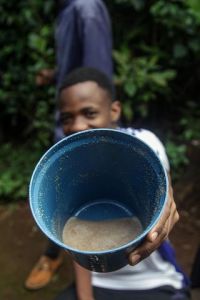
There was a man in the village of Sanjo who was an alcoholic. One day, because of his addiction, he drank alcohol that had not been properly fermented. The drink disturbed him greatly because it was harsh and impure, like dirt mixed with strong yeast. That is why people said about him, “He has swallowed the yeast of filth.”
This saying is compared to a person who is addicted to alcohol to the point that he loses self-control in his life. Such a person spends all his money buying alcohol because of his addiction. As a result, his family may lack food and other basic needs because he wastes his money on drinking.
That person is like the alcoholic who drank raw alcohol until he lost consciousness. In the same way, he continues spending his money on alcohol until his family suffers. That is why people say of him, “He has swallowed the yeast of filth.”
This saying teaches people to be careful enough avoid excessive drinking, so that they may take good care of their lives, families, and their possessions.
The Bible also warns about corruption and bad influence through the example of yeast. In the Book of Exodus 12:8–10 and 13:7, God commanded the Israelites to eat bread without yeast during the Passover as a symbol of purity.
Likewise, in First Epistle to the Corinthians 5:6, it is written, “A little yeast leavens the whole batch of dough,” teaching that a small sinful habit can spread and destroy a person’s life.
Therefore, just as yeast spreads through dough, alcoholism and bad habits can spread and ruin a person’s character, family, and future. This saying reminds us to live disciplined and responsible lives.


 Sukuma Legacy Project