Imbuki ya kahayile kenako ihoyelile munhu uyo oli na ngob’o yaki. Umunhu ng’wunuyo wikalaga nago ung’wenda gunuyo bhuli makanza kunguno aliadamanile akatumamile kago, umukikalile kakwe. Hunagwene abhanhu bhagang’wila giki, “ngob’o yapi iyene yamanga.”
Akahayile kenako kagalenganijiyagwa kuli nzunya uyo agitaga mihayo ya mugiti umukikalile kakwe kenako. Umunhu ng’wunuyo, agagabhinzaga amalagilo ga ng’wa Sebha bho gwita mihayo ya bhubhi kunguno ya guhayiwa bhutungilija umwikaji bhokwe bhunubho. Uweyi agadumaga uguyilela chiza ikaya yakwe yiniyo kunguno ya gugayiwa bhutungilija bhunubho ubho guwikalana chiza ubhuzunya bhokwe, umukikalile kakwe kenako.
Umunhu ng’wunuyo, agikolaga nuyo ozwalaga ngob’o yapi kunguno nuweyi agitaka mihayo ya mugiti bho gugabhinza amalagilo ga ng’wa Mulungu, umuwikaji bhokwe bhunubho. Hunagwene abhanhu bhagang’wilaga giki, “ngob’o yapi iyene yamanga.”
Akahayile kenako kalanga bhazunya higulya ya gubhiza na bhutungulija bho gugikalana chiza amalagilo ga ng’wa Mulungu, kugiki bhadule gujilela chiza ikaya jabho jinijo umuwikaji bhobho bhunubho.
Mathayo 19:16-17.
Yohana 6:54.
Mathayo 6:67-69.
Warumi 6:23.
Tito 1:2.
KISWAHILI: NGUO NYEUSI NI YA MGANGA WA KIENYEJI.
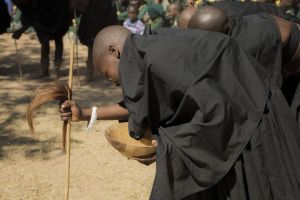
Chanzo cha msemo huo huongelea mtu aliyevaa nguo nyeusi. Mtu huyo, alikuwa nayo nguo hiyo wakati wote kwa sababu ya kutokuelewa vizuri matumizi yake, maishani mwake. Ndiyo maana watu walimwambia kwamba “nguo nyeusi ni ya mganga wa kienyeji.”
Msemo huo, hulinganishwa kwa mkristo yule ambaye hutenda mambo ya gizani katika maisha yake. Mtu huyo, huzivunja amri za Mungu kwa kutenda maovu kwa sababu ya kukosa uaminifu wake kwa Mungu, maishani mwake. Yeye hushindwa kuilea vyema familia yake kwa sababu ya kukosa uaminifu wake huo kwa Mungu, katika maisha yake hayo.
Mtu huyo hufanana na yule aliyevaa nguo nyeusi kwa sababu naye hutenda matendo ya gizani kwa kutenda maovu, maishani mwake. Ndiyo maana watu humwambia kwamba, “nguo nyeusi niya mganga wa kienyeji.”
Msemo huo hufundisha wakristo juu ya kuwa na uaminifu wa kuyaishi maagizo ya Mungu, ili waweze kuzilea vyema familia zao, maishani mwao.
Mathayo 19:16-17.
Yohana 6:54.
Mathayo 6:67-69.
Warumi 6:23.
Tito 1:2.
ENGLISH: BLACK CLOTHES BELONG TO TRADITIONAL MEDICINE DOCTORS
The origin of this saying refers to a person who wore black clothes all the time. He continued wearing them without understanding their meaning or purpose in his life. Because of this, people told him, “Black clothes belong to traditional medicine doctors.”
This saying is compared to a Christian who does things in the dark in his life. Such a person breaks God’s commandments by doing evil because of a lack of faithfulness to God. As a result, he fails to lead and raise his family well.
That person is like the one who wore black clothes, because he also lives in darkness by practicing evil. That is why people say to him, “Black clothes belong to traditional medicine doctors.”
The saying teaches Christians to be faithful enough to live according to God’s commandments so that they may raise their families well and inherit eternal life.
The Bible reminds us in the Gospel of Matthew 19:16–17 that keeping God’s commandments leads to life.
In the Gospel of John 6:54, Jesus teaches about eternal life through Him.
In the Gospel of Matthew 6:67–69, Peter confesses that Jesus has the words of eternal life.
In the Epistle to the Romans 6:23, we are told that the wages of sin is death, but the gift of God is eternal life
And in the Epistle to Titus 1:2, we are reminded of the hope of eternal life promised by God, who does not lie.

 Sukuma Legacy Project